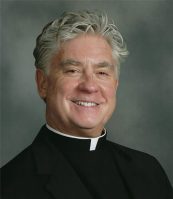
Father Gregory Boyle, S. J., has spent most of his adult life working with gang members in Los Angeles. In his book, The Whole Language: the power of extravagant tenderness, he comments on the ACEs (Adverse Childhood Experiences) Study to encourage us, who want to engage in and strengthen cities across America, to understand root obstacles more fully. ACEs looks at ten childhood traumas that occur before the age of eighteen, five that are personal and five that are familial. The first five have to do with being a victim of physical abuse, verbal abuse, sexual abuse, physical neglect, and personal neglect. The other five involve a parent that is alcohol or drug addicted, a mother who suffers domestic violence, a family member that is in jail, one that endures mental illness, and, finally, the disappearance of a parent due to death, abandonment, or divorce.
Experts attest that those who experience four or more of these setbacks (ACEs) have a high risk of having health problems and difficulties socializing. Boyle was dealt no ACEs in childhood—the opposite of a good poker hand, no aces was his lucky draw. Yet he interacts constantly with citizens who were given eight, nine, or ten of them (on the ACEs Assessment); put simply, they got a bad hand to play. This realization helped him to see his community differently and it directs his vocation and life purpose. I suspect that most people reading this column score less than four on ACEs while many inner-city residents, with whom we want to have a relationship and want to help attain a better existence, double, triple, or quadruple our score. There are numerous variables at play: the zip code where we live, the parent lottery we won, the education we received, siblings and extended family members who encourage us, the color privilege we possess, the social circles in which we associate, even the transportation options we have… The world is different for children who might regularly trip over needles, guns, or drugs in their play, eat from trash cans instead of going without another meal, or get practiced-on sexually by an older relative or someone else staying at their house. The stories are heart-wrenching.
Boyle’s life and ministry suggest that the early stages of creating a better city for all is to understand that people living in neighborhoods of poverty have different experiences of which we might be aware but have not lived. The good fortune given to those of us who have a low ACEs score does not make us morally superior or superior in any other way; it simply indicates that we got dealt a better hand with more privileges (less destructive circumstances or ACEs). Once we, like him, see things differently, we can begin to respect the incredible skills that many inner-city residents hone, even in the worst of situations. With new sight, we can understand their plight, befriend them, and support them.
Though we don’t have Boyle’s Homeboys Industries of LA in our city (that helps gang members transition to gainful citizens), KC has numerous opportunities for people with high ACEs to meet people with low ACEs, then interact and help one another see and act differently. Among them are Journey to New Life (that assists those coming out of prison return to society as productive civilians), Operation Breakthrough (that assists children and their families become literate and learn valuable life skills), High Aspirations (that assists urban boys become men with purpose and clear direction), KC Common Good (that assists police reduce crime through various social initiatives), Shepherd’s Centers (that assists elderly poor to receive healthy daily meals and the friendship of someone willing to visit with them), the Neighborhood Justice Center (that assists inner-city residents contend with legal challenges), One City Café (that provides homeless people with a sit-down meal and some dignity). If I can help you connect with one of these, or another social agency in town, I will be glad to do so.
 UPON THIS ROCK
Sent from my iPad
<
div dir=”ltr”>
<
blockquote type=”cite”>
LikeLike
Would like to print so Ted could read, cannot do that
Sent from my iPad
<
div dir=”ltr”>
<
blockquote type=”cite”>
LikeLike
Please send another way. My printer is connected to the internet
Sent from my iPad
<
div dir=”ltr”>
<
blockquote type=”cite”>
LikeLike
Hi Fr Don, I am a parishioner at Visitation. I am part of a team that volunteers to help a family of 5 adults and 7 children that arrived in Kansas City from Refugee Camps in Tanzania. The Family was originally from the Democratic Republic of Congo . They are here legally under a government program administered by Dell Lamb. The only member of this family that speaks English is a young boy who finished Kindergarten this year at Martin Luther Jr Elementary School . The rest of the family speak Swahili. My concern is for the oldest child, a boy of 13 who arrived in January. Are there any groups in the city that work with refugee teenage boys?
Love your columns, Pauline Dolan gloriadolan151@gmail.com
LikeLike
I continue to be inspired and educated by your blog. I have worked with Journey to a new Life for several years. It is a wonderful organization and much needed. It has given me a new appreciation for the difficulties encountered by men and women transitioning after incarceration. I hope to see you soon. Heidi
LikeLike