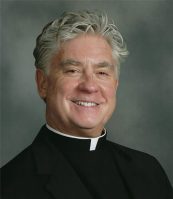
Many of us in our sixties have a diminishing interest in company policies, work regulations, and job procedures. It is true in my case. At this stage, I can increasingly profess what I have always believed: that as a priest I can be a better instrument of the Lord without being a cogwheel of the institutional church; others coming up in the system are better suited for it.
When younger, I was motivated by positions and titles such as pastor of X parish or director of Y office or chairman of Z committee. Those things are good for eager, energetic, upwardly mobile employees, as they once were for me. Now I am extremely grateful to serve in the often-ignored urban center of Kansas City among poor and marginalized members of society. I believe that the heart of the Gospel is easier to grasp in the heart of the city. I am anxious to step down as pastor because, by definition, it has numerous administrative duties; by doing so, I can focus on priestly service as a spiritual companion or faith-guide to people.
I am grateful to Bishop Johnston who is about my age and recognizes that different stages of life bring forth valuable perspectives and worthwhile contributions. As the spiritualist Father Richard Rohr contends, the first half of life is connected to establishing identity, accumulating competence, proving worth, and demonstrating ability while the second half gives way to sharing experiences, offering wisdom, and passing down accumulated insights for the benefit of those who follow. This seems true also for the first and second half of one’s vocation or career.
Since I cannot adequately oversee my three very active parish communities on my own, the bishop has allowed me to hire a Director of Operations to handle the daily business. For this, I am extremely thankful. Together with the operations director and other staffers from the communities (some that work across all three parishes) we will more readily and steadily advance the church’s mission in ways that allow us to work together, pool resources, share talents, provide direct services in conjunction with other social agencies, and address systemic issues within our society. In that style, I can focus more on the true mission of the church (less on administrative concerns). Excited about what lies ahead, I think this model will allow us to create a vibrant “Cathedral of the Streets” community where people throughout the metropolitan area can put faith into action through outreach to ostracized or marginalized members of society whom Jesus entrusted to our care.
With fewer priests available, this operational method will be good for future decades when it becomes common for priests (who are rarely skilled or trained for financial, managerial, or administrative positions) to serve multiple communities. In this way, spiritual guys like me can focus more on spiritual matters while people with business acumen can operate the business aspects of church life. Though I know it sounds obvious, it takes ecclesial bodies a while to recognize efficiency, relinquish control, or give way to newer operations. I am eager to welcome it and look forward to seeing it unfold.
 UPON THIS ROCK